
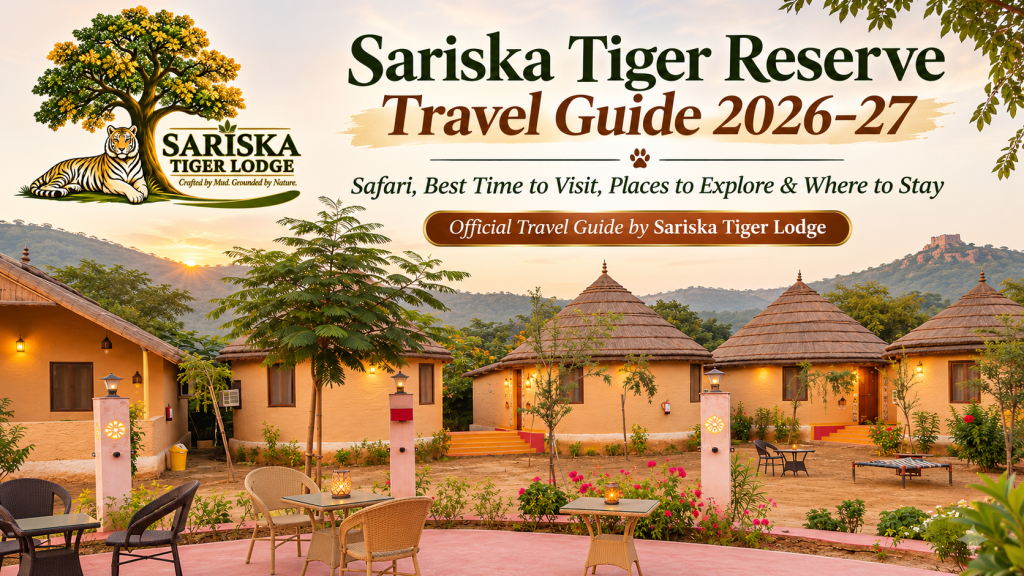
Discover Rajasthan’s wild side, from tiger safaris and historic forts to peaceful Aravalli landscapes and traditional mud cottage stays.
Rajasthan is celebrated for its magnificent forts, royal palaces, colourful festivals and desert landscapes. Yet beyond the familiar tourist routes lies another side of the state—one filled with forests, ancient hills, wildlife and remarkable conservation stories.
Welcome to Sariska Tiger Reserve, one of Rajasthan’s most fascinating destinations for wildlife enthusiasts, nature lovers, photographers, couples and families looking for a refreshing escape.
Situated in Alwar district, within the ancient Aravalli Hills, Sariska offers much more than the possibility of seeing a Bengal tiger. Its landscape combines dry deciduous forests, rocky hills, grasslands, secluded valleys, historic temples and remnants of Rajasthan’s royal past.
For travellers coming from Delhi, Jaipur, Gurugram or other parts of northern India, Sariska is an appealing destination for a weekend getaway or a longer nature-focused holiday.
But planning a successful Sariska trip requires more than simply booking a hotel and arriving at the forest entrance.
Which is the best time to visit Sariska Tiger Reserve? How do you book a safari? What is the difference between Sariska Main Gate and Tehla Gate? Which attractions are worth exploring? And where should you stay to enjoy wildlife, comfortable accommodation and a peaceful atmosphere?
This comprehensive Sariska Tiger Reserve travel guide for 2026–27 answers these questions and helps you plan a memorable journey.
1. Introduction to Sariska Tiger Reserve

Sariska Tiger Reserve is among Rajasthan’s important protected wildlife landscapes and an excellent destination for travellers interested in exploring nature beyond the state’s famous cities.
Located in the Alwar region, the reserve forms part of the Aravalli mountain system, one of the world’s oldest mountain ranges.
Unlike the dense, evergreen forests often associated with wildlife destinations, Sariska has a distinctive dry landscape. Depending on the season, visitors encounter wooded valleys, rocky ridges, open forest tracks, grasses and scattered water sources.
This varied terrain makes a safari visually rewarding, even when larger predators remain out of sight.
The destination also has a strong cultural identity. Historic forts, ancient temples, rural settlements and traditional architecture connect the forest landscape with centuries of local history.
A Sariska holiday can therefore combine several experiences:
- Exploring the forest on an authorised wildlife safari.
- Observing birds, deer, langurs and other animals in their natural habitat.
- Discovering the architectural heritage of Alwar and surrounding areas.
- Spending quiet mornings in the Aravalli countryside.
- Experiencing regional vegetarian food and Rajasthani hospitality.
- Staying in a nature-inspired cottage rather than a conventional city hotel.
For guests who want to experience Rajasthan at a slower pace, Sariska is a destination worth exploring over two or three days rather than rushing through in a single afternoon.
2. About Sariska Tiger Reserve: History, Location and Conservation
Where is Sariska Tiger Reserve located?
Sariska Tiger Reserve is situated in Alwar district, Rajasthan, northeast of Jaipur and southwest of the National Capital Region.
The reserve occupies an extensive stretch of the Aravalli landscape, with a combination of hills, forests, valleys and settlements in the surrounding region.
According to information published by the National Tiger Conservation Authority, the notified tiger reserve covers approximately 1,203 square kilometres, including about 881 square kilometres of core or critical tiger habitat and 322 square kilometres of buffer area.
These figures describe the broader protected reserve, not the area open for tourists on safari.
The remarkable tiger conservation story
One of Sariska’s most important characteristics is its place in India’s tiger conservation history.
The reserve experienced a severe conservation crisis when its original tiger population disappeared.
Rather than allowing the landscape to remain without tigers, conservation authorities undertook a tiger reintroduction programme, bringing animals from another protected tiger landscape in Rajasthan.
This pioneering effort made Sariska internationally significant as an example of tiger reintroduction and habitat restoration.
Today, the reserve continues to be important for wildlife conservation, scientific monitoring and the protection of the Aravalli ecosystem.
For visitors, this history adds an important perspective.
A tiger safari is not simply a sightseeing activity. It is an opportunity to understand the importance of protected habitats, responsible tourism, anti-poaching efforts and long-term ecological conservation.
What makes Sariska’s landscape different?
The forest ecosystem consists largely of tropical dry deciduous and thorn forest vegetation.
Dhok trees, scientifically known as Anogeissus pendula, are particularly characteristic of the landscape.
During the wetter months, portions of the forest become greener. As the dry season advances, changing foliage and reduced vegetation create a very different visual experience.
This seasonal transformation influences photography, animal movement and the overall atmosphere of a safari.
Sariska is also home to herbivores, carnivores, reptiles and a rich diversity of birds.
The combination of wildlife, forests and history gives the destination a character that goes well beyond its most famous resident—the tiger.
3. Why Visit Sariska Tiger Reserve?
Although tiger sightings attract considerable attention, Sariska offers several reasons to plan a visit.
Experience wildlife in its natural habitat
For many visitors, the highlight is exploring the reserve in an authorised safari vehicle.
The opportunity to encounter a tiger is exciting, but sightings of sambar, chital, nilgai, wild boar, langurs and other wildlife can be equally memorable.
Every safari is different because animals move freely and sightings depend on natural behaviour.
Explore the beauty of the Aravalli Hills
Sariska’s terrain is one of its greatest attractions.
Rocky slopes, seasonal greenery, dry forest tracks and open valleys create varied scenery throughout the year.
Morning and afternoon light can transform the hills, making the landscape particularly interesting for photographers.
Discover Rajasthan beyond palaces and cities
Sariska allows travellers to experience a quieter, more nature-oriented side of Rajasthan.
The journey through rural communities, agricultural landscapes and hills provides a welcome contrast to busy urban destinations.
Combine wildlife with heritage
Visitors can include heritage attractions such as Bhangarh Fort, Kankwari Fort, the Neelkanth temple complex and selected sites around Alwar, depending on access, location and available time.
Some attractions lie within protected forest areas and cannot be visited independently without the appropriate permission.
Enjoy a peaceful short break
Sariska also appeals to travellers who are not focused exclusively on wildlife photography.
Couples may prefer quiet evenings and nature-inspired accommodation, while families can enjoy a combination of safari activities, sightseeing and quality time together.
A thoughtfully planned Sariska holiday offers both adventure and relaxation.
4. Best Time to Visit Sariska Tiger Reserve
One of the most common questions among travellers is: When is the best time to visit Sariska?
The answer depends on whether your priority is comfortable weather, wildlife viewing, photography or a peaceful countryside retreat.
October to November: The post-monsoon landscape
As the monsoon season ends, the Aravalli countryside can appear greener and more refreshed.
These months can be attractive for landscape photography and general sightseeing.
Temperatures tend to become more comfortable compared with the peak summer months, although warm afternoons are still possible.
For travellers who enjoy scenery as much as wildlife, the post-monsoon period can be particularly appealing.
Safari access depends on the official reopening schedule and the condition of forest routes.
December to February: Pleasant days and cool mornings
Winter is generally one of the most comfortable periods for exploring Sariska and the wider Alwar region.
Clearer days and cooler temperatures make the season attractive for couples, families and weekend visitors.
Early morning safaris may be quite cold, particularly in an open vehicle.
Warm layers, a jacket and comfortable footwear are recommended.
Winter is also a pleasant time to spend longer periods outdoors, enjoy photography and explore heritage attractions.
However, cooler weather does not guarantee tiger sightings.
March to April: A balance of warmth and wildlife activity
During spring, temperatures begin to rise, and the forest gradually becomes drier.
Visitors can enjoy relatively comfortable mornings, although afternoons may become increasingly warm.
This period appeals to wildlife enthusiasts who prefer the changing dry-season landscape.
As vegetation changes, visibility in some areas may improve, but the exact location of animals remains unpredictable.
May to June: Hot weather and wildlife-focused visits
Summer can be extremely hot in Sariska.
Outdoor activities require greater care, especially during the middle of the day.
However, the dry season may create opportunities to observe wildlife around available water sources, subject to authorised safari routes.
Serious wildlife photographers sometimes prefer this period despite the demanding temperatures.
Visitors should carry sufficient drinking water, sun protection and appropriate clothing, and should avoid unnecessary outdoor exertion during extreme heat.
July to September: Monsoon and restricted safari access
The monsoon season brings changes to the forest ecosystem.
Rainfall supports vegetation growth but can also affect the condition of tracks and the safety of wildlife tourism.
Core tiger safari tourism is generally suspended during the monsoon period, commonly July through September.
Certain routes or activities may be subject to separate rules and permissions, so visitors should never assume that all areas are either open or closed.
If your main purpose is tiger safari, verify the forest department’s current operating schedule before planning a monsoon visit.
Best season at a glance
| Season | Typical experience | Best suited for |
|---|---|---|
| October–November | Post-monsoon greenery, warming days | Landscape lovers and leisure travellers |
| December–February | Cool mornings and pleasant daytime conditions | Families, couples and sightseeing |
| March–April | Increasing warmth and drier forest | Wildlife enthusiasts and photographers |
| May–June | Intense heat and dry-season conditions | Dedicated wildlife travellers |
| July–September | Monsoon scenery and restricted forest access | Relaxation-focused stays, subject to weather |
Our recommendation: For a balanced holiday combining a safari, sightseeing and comfortable outdoor conditions, consider October to March. For a more wildlife-focused visit, spring and early summer may also be worthwhile if you are prepared for higher temperatures.
5. Sariska Tiger Safari: Complete Guide for First-Time Visitors
A Sariska tiger safari is one of the most popular experiences in the Alwar region.
Exploring the forest in an authorised safari vehicle allows visitors to observe the reserve’s landscape and wildlife while following protected-area regulations.
However, safari planning deserves attention because permits, gates, operating schedules and vehicle availability can affect the experience.
What happens during a Sariska safari?
A typical wildlife safari involves travelling through designated forest routes in an authorised vehicle accompanied by the required safari personnel.
Visitors may encounter animals moving along forest tracks, resting in shaded areas, grazing in open spaces or visiting water sources.
Guides and drivers may help visitors interpret animal calls, tracks, vegetation and signs of wildlife activity.
The experience also provides opportunities to observe the terrain, birdlife and forest ecology.
Wildlife encounters occur naturally, and the route is governed by applicable park rules.
Jeep or Gypsy safari
An open safari Gypsy or jeep is a popular option for small groups and wildlife photography.
Advantages may include easier visibility, a more intimate forest experience and flexibility in seating arrangements.
Vehicle capacity, availability and charges must be confirmed when booking.
Canter safari
A canter is a larger safari vehicle used for group travel where the service is available.
It may be suitable for travellers who prefer a shared group experience.
Not every vehicle type is necessarily available from every gate or on every date.
Always check the available options for your selected entrance.
How to book a Sariska safari online
The safest starting point is the official Rajasthan forest tourism booking system.
Official booking portal: https://obms-tourist.rajasthan.gov.in/place-details/Sariska-Tiger-Reserve
The National Tiger Conservation Authority identifies this Rajasthan government portal for Sariska safari bookings.
A practical booking process is:
- Open the official safari booking website.
- Select Sariska Tiger Reserve.
- Choose your intended travel date.
- Review the available tourism entries, gates, safari options and sessions.
- Enter the required visitor information accurately.
- Review the applicable charges and booking conditions.
- Complete payment through the authorised process.
- Save your booking confirmation and carry the required identity documents.
The booking interface and exact sequence may change. Always follow the instructions displayed on the official system.
Morning safari or afternoon safari?
Sariska safaris are commonly conducted in morning and afternoon sessions during operational periods.
Morning safaris offer early light and often cooler temperatures.
Afternoon safaris provide a different atmosphere as the landscape changes in the later part of the day.
Neither session guarantees a tiger encounter.
For travellers who want a more complete wildlife experience, booking more than one safari across different permitted sessions can provide additional opportunities to observe the forest.
Safari timings in Sariska
Safari operating hours change with the season and daylight conditions.
Rather than relying on a permanently fixed timing table, check the exact reporting and departure times displayed for your selected date.
This is especially important around seasonal transitions, changes in park operations and extreme weather.
Is Sariska safari open on Wednesday?
Rajasthan Tourism identifies Wednesday as a regular closure day for forest tourism.
Visitors should therefore avoid assuming that a normal Wednesday tiger safari will be available.
If your trip includes a Wednesday, check the official booking calendar and plan permitted sightseeing or leisure activities instead.
Is a tiger sighting guaranteed?
No.
Tigers are wild animals, and there is no ethical or reliable way to guarantee a sighting during a safari.
A successful safari should be appreciated for the complete experience, including deer, birds, forest landscapes, animal tracks and the knowledge shared by authorised guides.
Important safari etiquette
Responsible behaviour protects wildlife and makes the forest experience better for everyone.
- Follow instructions from authorised guides and forest staff.
- Do not feed, chase, disturb or provoke animals.
- Keep noise levels low.
- Never leave the vehicle where prohibited.
- Do not litter.
- Avoid flash photography and other disturbance where restricted.
- Observe all vehicle, route, speed and reporting rules.
- Do not use drones without the applicable permissions.
- Respect wildlife corridors and protected habitats.
Responsible tourism is essential to preserving Sariska for future generations.
6. Sariska Main Gate vs Tehla Gate: Which Entrance Should You Choose?
One of the most important decisions when planning a Sariska safari is selecting the correct entrance.
Sariska Main Gate and Tehla Gate are separate access points, serving different approaches to the reserve.
Choosing a resort without checking the safari gate can lead to unnecessary travel on the morning of your safari.
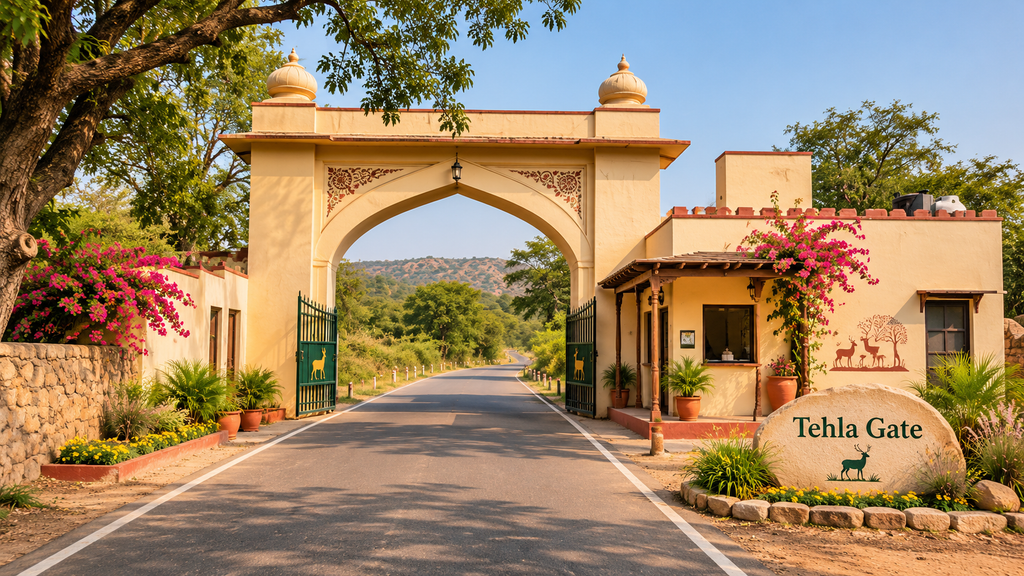
Sariska Main Gate
The main Sariska entrance is a commonly used gateway to the reserve.
It is associated with the traditional Sariska approach and is convenient for visitors travelling through that side of the Alwar region.
Some recognised forest attractions and safari routes are approached from this side, subject to permissions and the current tourism arrangement.
Tehla Gate
Tehla Gate is another recognised entrance to Sariska Tiger Reserve.
Located on the Tehla side of the landscape, it is particularly relevant for travellers staying in surrounding villages and nature resorts.
The countryside around Tehla also appeals to guests seeking a quieter experience away from busy city destinations.
Sariska Tiger Lodge is located in the Talab–Tehla area, near Sariska Tiger Reserve Gate No. 2.
Are the safari routes the same?
Not necessarily.
Tourism routes, zone allocations and access arrangements depend on forest department rules.
A permit for one entrance should not be assumed to allow entry from another.
The most important rule is to book your safari for the correct gate and use that same gate when reporting for your safari.
Which gate is better for tiger sightings?
There is no permanently guaranteed best gate for seeing tigers.
Wildlife movements change over time, and animals are not confined to tourist preferences.
A gate that receives positive sighting reports during one period may provide a different experience later.
Instead of selecting a gate based on unverified promises, consider permit availability, your accommodation location, official route access and your overall travel plan.
Why accommodation location matters
Imagine booking an early morning safari from Tehla Gate but choosing accommodation based only on its general proximity to “Sariska.”
You may discover that your resort is closer to the main entrance on the opposite approach.
This can complicate your morning travel.
Before confirming your stay, verify:
- The safari gate printed on your permit.
- The location of your accommodation.
- The driving route between the property and the gate.
- Reporting time and required documentation.
- Transport arrangements for early departure.
If you are planning a Tehla-side safari, staying in the Talab–Tehla area may make your itinerary more convenient.
7. Wildlife and Birds Found in Sariska Tiger Reserve
Although the Bengal tiger is Sariska’s best-known animal, the reserve supports a varied wildlife community.
Knowing what to look for can turn a safari into a much more rewarding experience.
Bengal tiger
The Bengal tiger is an apex predator and a powerful symbol of India’s wildlife conservation efforts.
Spotting one in its natural habitat is an unforgettable experience, but visitors should remember that tigers are solitary, wide-ranging animals.
They may remain concealed within vegetation or spend long periods away from tourist routes.
Leopard
Leopards also occur in Sariska.
Their ability to move quietly through rocky terrain and woodland makes them difficult to observe.
A leopard sighting is special precisely because these animals are often elusive.
Sambar deer
Sambar are among the larger deer found in Indian forests.
Their size, appearance and behaviour make them interesting subjects for wildlife observation.
They are also an important prey species for large carnivores.
Chital
Chital, or spotted deer, are recognised by their distinctive white-spotted coats.
Visitors may encounter groups feeding or resting in suitable forest habitat.
Nilgai
Nilgai, sometimes called blue bulls, are large antelopes found in parts of the Indian subcontinent.
Their appearance and movement can make them easy to distinguish from deer.
Wild boar and langurs
Wild boar, langurs and rhesus macaques are additional animals that visitors may encounter during a safari.
Observing how these species move, feed and react to their surroundings can be as fascinating as searching for larger predators.
Other carnivores
The reserve’s broader wildlife includes animals such as striped hyenas, jungle cats and jackals.
Sightings vary considerably by habitat, season and the behaviour of individual animals.
Birdwatching in Sariska
Sariska is also attractive to bird enthusiasts.
Rajasthan Tourism describes the reserve as supporting more than 220 bird species, including resident and migratory birds.
Depending on habitat and season, birdwatchers may look for peafowl, parakeets, raptors, game birds and other species associated with the dry forest landscape.
A pair of binoculars can significantly improve the experience.
Early morning periods are often pleasant for observing birds, although access restrictions and weather conditions still apply.
Wildlife photography tips
For photography enthusiasts, patience is more important than rushing from one sighting to another.
Carry suitable equipment, protect your camera from dust, and be prepared for changing light.
Use a telephoto lens when photographing animals at a distance and avoid actions that disturb wildlife.
Even without a tiger sighting, Sariska offers opportunities for compelling landscape, bird and habitat photography.
8. Top Places to Visit Near Sariska Tiger Reserve
A Sariska trip becomes more rewarding when visitors explore attractions beyond the safari experience.
The wider region offers heritage, scenic landscapes, temples and places associated with Rajasthan’s history.
Kankwari Fort
Kankwari Fort is one of the most intriguing historic structures associated with Sariska.
Located within the reserve landscape, the fort is connected with stories from the Mughal period.
It is particularly associated with the history of Dara Shikoh and Aurangzeb.
The surrounding forest and elevated location add to its appeal.
Travel tip: Access is regulated. Do not assume that every safari itinerary includes a fort visit or that visitors can enter the structure independently.
Pandupol Hanuman Temple
Pandupol Hanuman Temple is a significant religious attraction associated with the Sariska area.
Local traditions connect the site with stories from the Mahabharata.
The temple has long been visited by devotees and travellers interested in the area’s spiritual heritage.
Because it lies within the protected landscape, road access, visiting days and permissions are governed by official regulations.
Check current rules before planning a visit.
Neelkanth Temple
The Neelkanth temple complex is known for its historic architectural and religious significance.
Its stone carvings and setting make it particularly interesting for travellers who appreciate heritage sites.
Access may require appropriate local arrangements, and the condition of approaches can vary.
Visitors should check whether their planned route and vehicle are suitable.
Bhangarh Fort
Bhangarh Fort is among the region’s most widely recognised heritage attractions.
Known popularly for its mysterious legends, the site is also an impressive historic complex with ruined palaces, temples, gateways and settlement remains.
Rather than focusing only on folklore, visitors can appreciate its architecture and scenic Aravalli surroundings.
Bhangarh can make an interesting addition to a Sariska itinerary, although driving distances depend on the route and accommodation location.
Siliserh Lake
Siliserh Lake, near Alwar, provides a scenic contrast to the dry forest environment.
The lake is associated with a historic palace and is surrounded by hills.
It can be an attractive place for a leisurely outing, landscape photography and a change of scenery.
Boating availability and operating conditions should be checked locally.
Alwar City
Alwar offers additional heritage and cultural experiences for visitors with more time.
Its forts, historic buildings, markets and regional food traditions provide an opportunity to discover the wider identity of this part of Rajasthan.
Travellers arriving by train may also use Alwar as a convenient starting point for onward road travel.
Talab and Tehla countryside
For guests staying near Tehla Gate, the surrounding countryside offers its own charm.
Traditional settlements, agricultural landscapes, village roads and views of the Aravalli hills create a peaceful setting.
Travellers should respect private land, local customs and community privacy.
A relaxed countryside experience can be just as memorable as visiting a major tourist attraction.
9. How to Reach Sariska Tiger Reserve
Sariska is accessible by road from major cities in northern India.
However, it is important to distinguish between travelling to the broad Sariska destination and reaching a specific safari gate or accommodation property.
Delhi to Sariska
Sariska is a popular nature getaway for travellers from Delhi and the National Capital Region.
Rajasthan Tourism places the Sariska area at approximately 200 kilometres from Delhi as a general destination reference.
Your actual distance can vary considerably depending on where you begin, road conditions and whether you are travelling to Sariska Main Gate or the Tehla side.
For a weekend trip, leaving early generally allows more flexibility for check-in and sightseeing.
Avoid scheduling a safari immediately after a long drive unless you have enough time to reach the gate before reporting.
Jaipur to Sariska
Jaipur is another important starting point for a Sariska holiday.
The wider Sariska destination is roughly 107 kilometres from Jaipur according to Rajasthan Tourism, although the distance to your selected gate or resort may differ.
Travellers should plan their route using the exact property address rather than a generic national park map pin.
Gurugram to Sariska
Sariska is also an appealing short-break destination for residents of Gurugram.
Road travel is generally the practical option, with the exact route depending on departure location, traffic and your destination within the Sariska region.
For an early safari, arriving the previous evening is usually more comfortable than travelling overnight and heading directly to the entrance.
Alwar to Sariska
Alwar is a useful transport hub for visitors travelling by rail or combining Sariska with local sightseeing.
Onward transport can be arranged by private car or taxi, subject to availability.
Confirm the price, route and vehicle suitability in advance.
Nearest railway station
Alwar Junction is an important railway connection for travellers visiting the wider region.
Train availability and timings should be checked through official railway services.
Nearest airports
Jaipur International Airport and Delhi’s Indira Gandhi International Airport are practical airport options for visitors from other parts of India or overseas.
Which airport is more convenient depends on flight schedules, road transfers and your final destination.
Reaching Sariska Tiger Lodge
Sariska Tiger Lodge is situated at:
Khasra No. 1512, VPO Talab, Tehsil Tehla (Rajgarh), near Sariska Tiger Reserve Gate No. 2, Alwar, Rajasthan 301410, India.
For accurate navigation, use the lodge’s exact map location rather than searching only for Sariska National Park.
Travel assistance: +91 81888 11211
If you have an early safari, confirm the reporting gate and local travel arrangements with the lodge team before arrival.
10. Where to Stay Near Sariska Tiger Reserve
Choosing the right accommodation is an important part of planning a Sariska holiday.
The region offers different styles of stays, from practical hotels and safari-focused properties to nature retreats and distinctive cottage accommodation.
The best choice depends on your travel priorities.
For wildlife-focused travellers
If you are primarily visiting for a tiger safari, prioritise the location of your confirmed safari gate.
Early morning departures can make travel logistics particularly important.
Ask about the route, transfer arrangements, breakfast timing and whether the property can provide guidance on official safari booking procedures.
For couples
Couples may prefer privacy, a peaceful atmosphere and attractive surroundings.
Accommodation with a private sit-out, garden environment or distinctive interior design can make the holiday enjoyable even when no safari is scheduled.
For families
Families should look beyond general room descriptions and confirm sleeping arrangements, occupancy limits and child policies.
A family-oriented cottage can be particularly convenient when travelling with children or multiple generations.
For slow travellers
Not every Sariska holiday needs a packed itinerary.
Some travellers prefer to combine one safari with leisurely meals, photography, reading and time outdoors.
For this type of getaway, the character of the accommodation matters as much as its proximity to tourist attractions.
Why consider a mud cottage stay?
Traditional earthen-inspired architecture creates an experience that feels distinctly different from a standard hotel room.
Textured walls, natural-looking finishes and warm colours can complement Rajasthan’s surrounding landscape.
For visitors interested in regional craftsmanship and slower travel, a thoughtfully designed mud cottage can become one of the highlights of the trip.
11. Experience Traditional Mud Cottages at Sariska Tiger Lodge
For travellers who want their accommodation to reflect the character of Rajasthan, Sariska Tiger Lodge offers a heritage-inspired retreat near Sariska Tiger Reserve’s Tehla-side entrance.
The lodge celebrates the visual beauty of earthen architecture, traditional craftsmanship and an unhurried approach to hospitality.
Located in Talab, Tehla, the property offers three categories of mud cottage accommodation designed for different styles of travel.
Mud Cottage: For couples and slow travellers
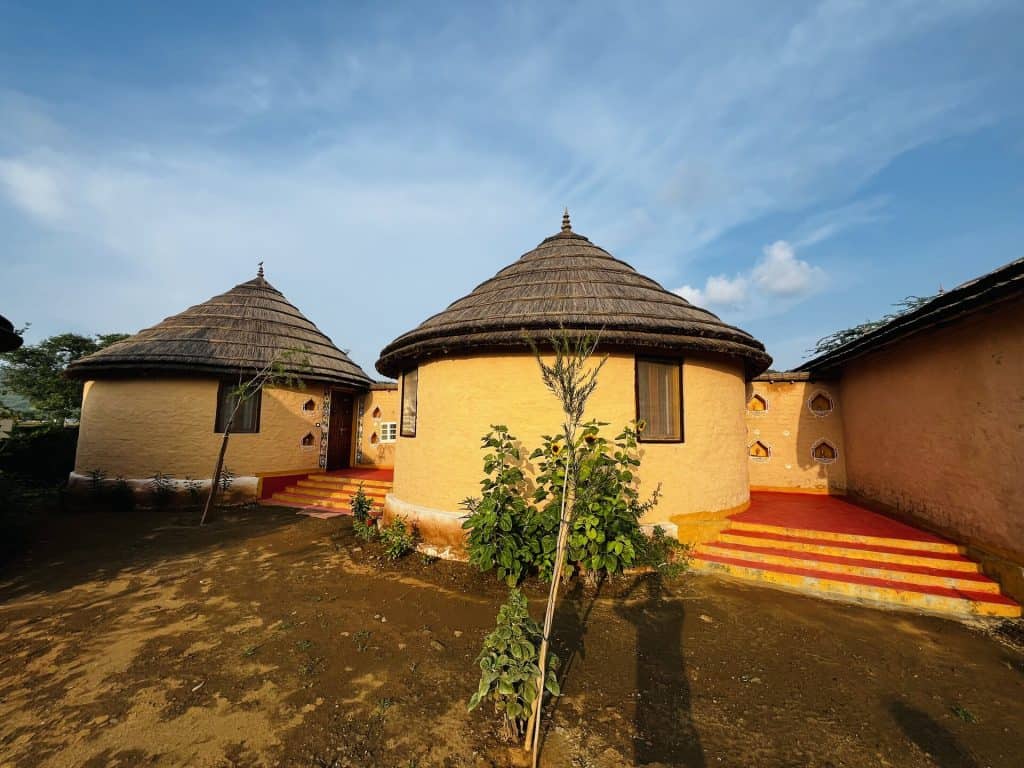
The Mud Cottage is designed for guests who appreciate simplicity, warm interiors and quiet surroundings.
Its earthen-inspired design complements the natural character of the Aravalli landscape.
Key features include:
- Private sit-out.
- Garden surroundings.
- Welcome drink and high tea.
- Breakfast included.
Starting rate: ₹9,000 + applicable taxes per night.
This category can be an attractive option for couples, solo travellers and guests planning a peaceful weekend.
Family Mud Cottage: For shared holidays
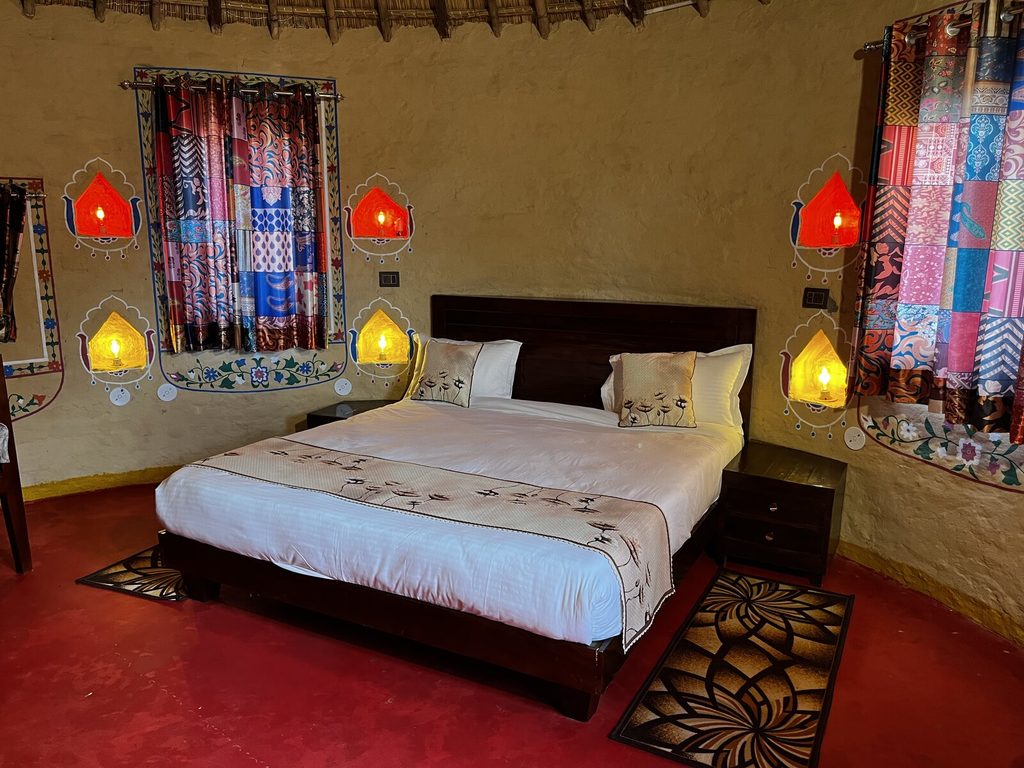
The Family Mud Cottage is intended for guests looking to spend quality time together.
Its family-oriented concept makes it suitable for travellers who want more shared space than a conventional room may offer.
Highlights include:
- Family seating.
- Garden surroundings.
- Breakfast included.
- Accommodation designed with family stays in mind.
Starting rate: ₹11,000 + applicable taxes per night.
Guests should confirm the exact bedroom layout, occupancy and bedding arrangements before booking.
Jacuzzi Mud Cottage: For a premium retreat
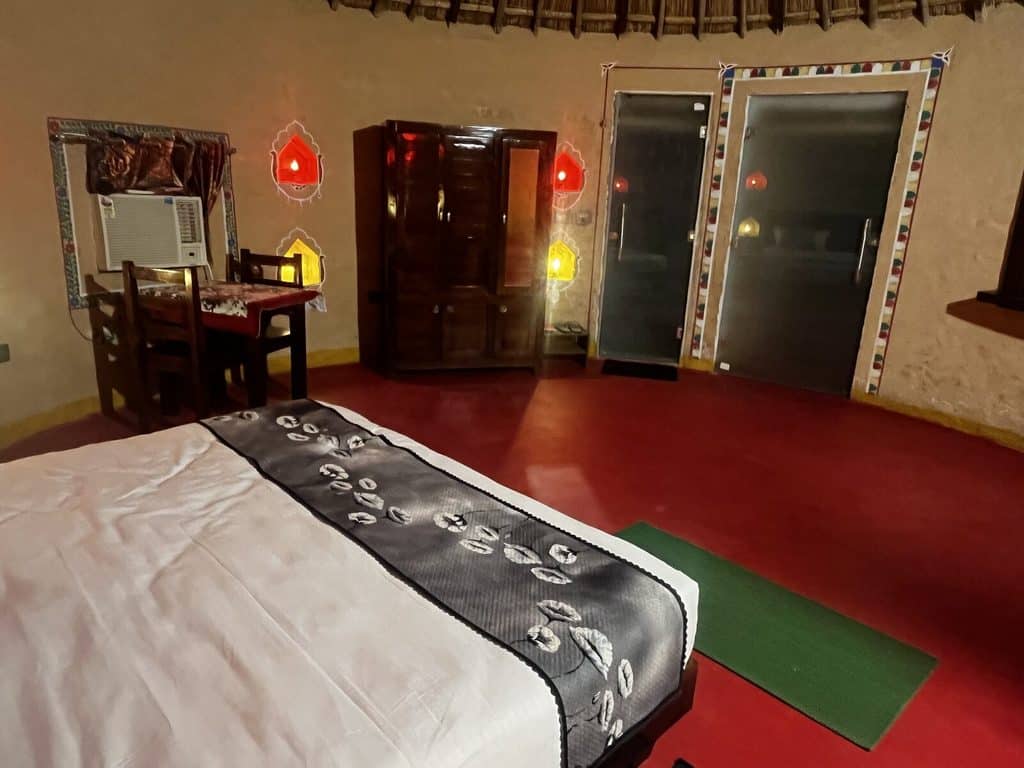
For travellers seeking a more indulgent stay, the Jacuzzi Mud Cottage combines a premium cottage atmosphere with a jacuzzi experience.
Its interiors and secluded ambience make it an appealing option for a romantic escape or a special occasion.
Highlights include:
- Jacuzzi experience.
- Secluded ambience.
- Premium interiors.
- Breakfast included.
Starting rate: ₹12,000 + applicable taxes per night.
Confirm the current jacuzzi configuration, availability and applicable booking conditions with the reservations team.
The appeal of earthen-inspired architecture
Mud cottages have a distinctive architectural language rooted in traditional building practices.
Natural textures and earthy tones create a visual connection with the landscape.
Earthen construction is often valued for thermal mass and its relationship with traditional climate-responsive design, although actual room temperatures and comfort depend on the complete building design, ventilation and weather conditions.
At Sariska Tiger Lodge, the experience is centred on the atmosphere of traditional architecture combined with practical guest comforts.
Traditional Rajasthani dining
Food adds another dimension to a stay in Rajasthan.
The lodge highlights vegetarian dining inspired by regional traditions.
Depending on the current menu, guests may enjoy dishes such as Dal Baati Churma, Gatte Ki Sabzi, Rajasthani Kadhi, Bajra Roti, Lehsun Chutney, Chaach and traditional sweets.
Food availability, meal packages and dietary requirements should be confirmed with the property.
Plan your stay directly
Whether you are planning a weekend safari, a family holiday or a quiet escape in the Aravalli countryside, Sariska Tiger Lodge offers an alternative to conventional hotel accommodation.
Explore Sariska Tiger Lodge: https://www.sariskatigerlodge.com/
Call or WhatsApp: +91 81888 11211
Email: info@sariskatigerlodge.com
Room rates are starting prices and remain subject to occupancy, dates, taxes, availability and written confirmation.
12. Things to Do in Sariska Beyond Tiger Safari
A wildlife safari may be the highlight of your holiday, but there are many ways to enjoy Sariska without spending every hour inside the reserve.
Birdwatching
The wider Sariska landscape attracts birdlife throughout the year.
Guests interested in birdwatching can explore suitable permitted areas, keeping a respectful distance from nesting sites and wildlife.
Binoculars and a field guide can make the experience more rewarding.
Nature photography
From rugged hills to trees, changing skies and village landscapes, Sariska offers varied opportunities for photography.
Early morning and late afternoon light can be particularly appealing.
Remember that protected forest areas have specific access and photography regulations.
Village experiences
The Talab and Tehla countryside provides glimpses of rural life in Rajasthan.
Traditional buildings, farming landscapes and everyday community activity contribute to the region’s identity.
Any village walk should be organised respectfully, with local guidance where appropriate.
Always ask permission before photographing people or private property.
Stargazing
Away from heavily illuminated urban areas, evenings can offer opportunities to appreciate the night sky.
Visibility depends on weather, moonlight and local lighting conditions.
A quiet evening outdoors can be an enjoyable part of a nature retreat.
Seasonal bonfire evenings
During colder months, some nature properties may arrange bonfires in permitted and safe areas.
Ask your accommodation provider about availability, safety rules and additional charges.
Traditional Rajasthani cuisine
Trying regional food is an essential part of a Rajasthan holiday.
Vegetarian preparations, local breads, lentil dishes and traditional sweets introduce visitors to the flavours of the region.
Relaxation and slow travel
Sometimes the most enjoyable holiday activity is simply having time to relax.
A morning cup of tea, breakfast in pleasant surroundings, an afternoon of reading or an evening with family can provide a welcome break from daily routines.
At Sariska Tiger Lodge, guests can enquire about seasonal activities, countryside experiences and locally available arrangements.
Activities are subject to availability and should not be assumed to be included in room rates.
13. Two-Day Sariska Weekend Itinerary
For travellers coming from Delhi, Jaipur or neighbouring cities, a two-day itinerary offers a manageable introduction to Sariska.
Day 1: Arrival, relaxation and local exploration
Morning
Begin your road journey with enough time to travel comfortably.
If you are driving from another city, plan short breaks along the way and avoid rushing.
Afternoon
Arrive at your accommodation and complete check-in.
Enjoy lunch or refreshments according to your selected meal package.
Spend some time exploring your cottage and the surrounding property.
Late afternoon
Depending on your location, interests and available time, consider a short countryside outing or an appropriate nearby attraction.
Avoid attempting a long sightseeing drive immediately before sunset.
Evening
Return to the property for a relaxed evening.
Enjoy regional food, conversation and the quieter atmosphere of the Aravalli countryside.
Before sleeping, check your safari booking confirmation, reporting time, gate and identification documents.
Day 2: Wildlife safari and departure
Early morning
Wake up in time for your authorised safari session.
Travel to the correct forest entrance and complete the required reporting formalities.
Enjoy the wildlife experience while following all park regulations.
Late morning
Return to the lodge and enjoy breakfast according to the timing arranged with the property.
Freshen up and relax before departure.
Afternoon
Check out and begin your return journey.
If travel time permits, you may include an accessible heritage attraction along your route.
Who is this itinerary ideal for?
This plan works well for couples, short-break travellers and families seeking a comfortable introduction to the destination.
It keeps the focus on one key safari experience without making the weekend unnecessarily tiring.
14. Three-Day Sariska Relaxation and Wildlife Itinerary
If you have more time, a two-night, three-day holiday offers a better balance between wildlife and relaxation.
Day 1: Travel and settle into Sariska
Arrive at your selected accommodation.
Spend the afternoon exploring the property and enjoying the surrounding countryside.
Keep the evening free for a leisurely meal and relaxation.
This gentle start is especially suitable for visitors arriving after a long road journey.
Day 2: Safari and local experiences
Begin with a morning safari, subject to permits and operating schedules.
After returning, enjoy breakfast and a period of rest.
In the afternoon, you can choose another authorised safari session if booked, or focus on nature photography, appropriate local sightseeing or simply enjoying your accommodation.
For travellers staying near Tehla Gate, checking the exact route and nearby attractions in advance helps avoid unnecessary travel.
Day 3: Heritage exploration and departure
After breakfast, consider a suitable heritage stop or scenic destination on your return route.
Bhangarh Fort, Alwar attractions or other sites may be appropriate depending on your direction of travel.
Allow sufficient time for the drive and check current opening hours before setting out.
Why choose two nights instead of one?
A longer visit gives you more flexibility.
It reduces the pressure to combine a long journey, safari, sightseeing and departure into a tightly packed schedule.
It also leaves time to enjoy the accommodation experience, which can be an important part of a nature holiday.
For couples or families seeking relaxation, this can be especially valuable.
15. Sariska Trip Budget and Essential Travel Planning Tips
The overall cost of a Sariska holiday depends on the season, number of travellers, accommodation category, transport arrangements and safari bookings.
Understanding the main expenses can help you plan realistically.
Accommodation costs
Accommodation rates vary widely across the region.
At Sariska Tiger Lodge, published starting prices are:
| Cottage category | Starting nightly rate |
|---|---|
| Mud Cottage | ₹9,000 + taxes |
| Family Mud Cottage | ₹11,000 + taxes |
| Jacuzzi Mud Cottage | ₹12,000 + taxes |
Final rates depend on travel dates, occupancy and booking conditions.
Safari costs
Safari expenses can include permit charges, vehicle costs and other applicable fees.
Charges may differ by vehicle type, visitor category and forest department regulations.
Because these figures may change, verify the total payable amount through the authorised booking system.
Do not rely on an old blog post or advertisement for current safari pricing.
Transport costs
Road travel may include fuel, tolls, driver charges and local transfers.
If using a hired vehicle, confirm whether the quotation includes waiting time, overnight driver expenses and tolls.
Food and activities
Check which meals are included in your accommodation package.
Breakfast may be included in your cottage booking, while lunch, dinner and special activities may have separate terms.
What to pack for Sariska
A practical packing checklist includes:
- Government-issued identification matching your safari booking.
- Safari permit confirmation.
- Comfortable, neutral-coloured clothing.
- A jacket or warm layer for winter mornings.
- Sun protection during warmer months.
- Closed, comfortable footwear.
- Reusable water bottle.
- Binoculars and camera, if available.
- Personal medications and essential toiletries.
- Power bank and charging accessories.
Avoid bright, disruptive clothing or unnecessary noise-making equipment during wildlife activities.
Common travel mistakes to avoid
Booking the wrong safari gate: Always check the entrance named on your permit.
Assuming every day is a safari day: Confirm weekly closures and seasonal restrictions.
Leaving safari bookings until the last moment: Popular dates may have limited availability.
Expecting a guaranteed tiger sighting: Wildlife encounters are always uncertain.
Planning too many attractions in one day: Travel routes and opening hours can make an overloaded itinerary impractical.
Choosing accommodation only by price: Location, cleanliness, room suitability and the experience offered are also important.
Ignoring summer temperatures: Plan hydration, transport and outdoor activity carefully.
Responsible travel tips
Carry reusable items where practical, dispose of waste properly and respect the local environment.
Avoid purchasing products associated with illegal wildlife trade.
Follow protected-area regulations and support businesses that treat local communities and natural resources responsibly.
A thoughtful travel approach improves your experience while helping protect the destination.
16. Frequently Asked Questions About Sariska Tiger Reserve
1. Where is Sariska Tiger Reserve located?
Sariska Tiger Reserve is located in Alwar district, Rajasthan, within the Aravalli Hills. It is accessible from Delhi, Jaipur, Alwar and other parts of northern India.
2. What is the best time to visit Sariska Tiger Reserve?
October to March is generally suitable for comfortable sightseeing and nature-focused holidays. Wildlife enthusiasts may also consider the hotter months of April to June. Safari operations depend on official seasonal schedules.
3. How can I book a Sariska tiger safari?
Use the Rajasthan government’s authorised forest tourism booking system. Select your travel date, available safari option and correct entrance, then follow the official booking instructions.
4. Is tiger sighting guaranteed in Sariska?
No. Tigers are free-ranging wild animals, and sightings depend on their natural movements, habitat conditions and chance.
5. Is Sariska Tiger Reserve closed on Wednesday?
Rajasthan Tourism identifies Wednesday as a regular forest tourism closure day. Always confirm the official schedule and any special arrangements for your travel date.
6. Is Sariska open during the monsoon season?
Core tiger safari tourism is generally restricted or suspended during the monsoon, commonly July through September. Other routes or activities may follow different regulations. Check the official forest department schedule.
7. What is the difference between Sariska Gate and Tehla Gate?
They are separate access points to Sariska Tiger Reserve. Your safari booking determines where you must report. Always choose accommodation and transport arrangements with your confirmed gate in mind.
8. How many days are enough for Sariska?
Two days are suitable for a short safari getaway. Three days provide a more relaxed opportunity to combine wildlife, sightseeing and time at your accommodation.
9. Is Sariska suitable for families?
Yes. Sariska can be a rewarding family destination when the itinerary is planned around travel time, permitted safari activities, weather and the ages of accompanying children.
10. What animals can be seen in Sariska?
The reserve supports Bengal tigers, leopards, sambar, chital, nilgai, wild boar, langurs, jackals and numerous bird species. Actual sightings are unpredictable.
11. Can I visit Sariska from Delhi over a weekend?
Yes. Sariska is a popular short-break destination from Delhi and the National Capital Region. A one- or two-night stay can make the trip more comfortable than a rushed day visit.
12. Are there mud cottages near Sariska Tiger Reserve?
Yes. Sariska Tiger Lodge, located in the Talab–Tehla area near Sariska Tiger Reserve Gate No. 2, offers Mud Cottages, Family Mud Cottages and Jacuzzi Mud Cottages.
13. Is breakfast included at Sariska Tiger Lodge?
Breakfast is included in the published descriptions of all three cottage categories. Guests should confirm their final package inclusions when booking.
14. Are safari charges included in the cottage price?
Safari charges should not be assumed to be included. Guests should confirm safari arrangements, permits and any additional charges separately.
15. Is Sariska suitable for a romantic getaway?
Yes. Its scenic surroundings, nature-oriented atmosphere and distinctive accommodation options make Sariska appealing for couples looking for a peaceful break.
16. Can Sariska be combined with Bhangarh Fort?
Yes, depending on the travel route and available time. Bhangarh Fort is a separate heritage attraction in the wider region. Confirm driving routes and visiting hours before making plans.
17. Plan Your Sariska Getaway with Sariska Tiger Lodge
Sariska is a destination where the excitement of wildlife discovery meets the quieter pleasures of Rajasthan’s countryside.
You may arrive hoping to see a Bengal tiger, but the experience often becomes much richer.
The morning light over the Aravalli Hills, a herd of deer moving through the forest, the sound of birds, the history of an old fort and an evening spent away from city noise can all become memorable parts of your journey.
Whether you are planning your first tiger safari, a weekend escape from Delhi or Jaipur, a family holiday or a romantic retreat, thoughtful planning makes a difference.
Choose your season carefully. Book through authorised safari channels. Confirm your entrance gate. Allow time to explore beyond the forest. And select accommodation that complements the kind of holiday you want.
At Sariska Tiger Lodge, we welcome travellers looking for a distinctive stay inspired by Rajasthan’s traditional earthen architecture.
Our Mud Cottage, Family Mud Cottage and Jacuzzi Mud Cottage categories offer different ways to enjoy the region’s natural atmosphere while staying near the Tehla side of Sariska Tiger Reserve.
Begin your Sariska journey
Sariska Tiger Lodge
Built by Nature · Perfected by Tradition
Address: Khasra No. 1512, VPO Talab, Tehsil Tehla (Rajgarh), near Sariska Tiger Reserve Gate No. 2, Alwar, Rajasthan 301410.
Website: https://www.sariskatigerlodge.com/
Call / WhatsApp: +91 81888 11211
Alternative contact: +91 81888 11178
Email: info@sariskatigerlodge.com
For cottage availability, current rates, meal inclusions and travel assistance, contact our reservations team directly.
Escape the ordinary. Experience the beauty of Sariska.
Travel information reviewed for the 2026–27 season. Safari permits, operating days, entry regulations, fees, route availability and weather-related restrictions may change. Visitors should confirm current information with the Rajasthan Forest Department before travelling.